Category: CPN Guide

  • 3-Step Formula to Financial Success With CPN Numbers

    3-Step Formula to Financial Success With CPN Numbers

    Financial success is a goal many aspire to achieve, and for some, the journey may involve exploring alternative avenues. One such method gaining attention is the use of CPN numbers. In this article, we’ll delve into a comprehensive 3-step formula that guides individuals towards financial prosperity through the strategic use of CPN numbers.

    Definition of CPN Numbers

    CPN, or Credit Privacy Number, is a nine-digit identification number that can be used for financial transactions. It is distinct from a Social Security Number (SSN) and is often associated with credit-related activities.

    Financial success goes beyond mere monetary wealth; it encompasses stability, freedom, and the ability to achieve one’s goals. Understanding the role CPN numbers play in this journey is crucial.

    This article presents a structured 3-step formula that leverages CPN numbers to pave the way for financial success. Each step builds upon the previous one, creating a holistic approach to wealth-building.

    Understanding CPN Numbers

    Understanding CPN Numbers is essential for those exploring alternative avenues in managing their financial identity. CPN, or Credit Privacy Number, is a unique nine-digit identifier designed to enhance privacy during credit transactions. It’s crucial to dispel misconceptions surrounding its use and acknowledge its legality when employed within the boundaries of the law.

    Unlike Social Security Numbers (SSNs), CPN Numbers offer a layer of privacy without compromising legality. This section delves into the nuances of what CPN Numbers are, addressing common myths, and emphasizing the importance of using them responsibly.

    By gaining a comprehensive understanding of CPN Numbers, individuals can make informed decisions about incorporating them into their financial strategies, ensuring they navigate this aspect of their financial journey with clarity and confidence.

    Step 1: Building a Solid Foundation

    Building a solid foundation is the fundamental cornerstone for achieving a secure and prosperous financial future. It lays the groundwork for individuals to navigate the complexities of managing their finances effectively.

    1. Financial Education emphasizes the importance of financial literacy, equipping individuals with the knowledge for informed decisions.
    2. Establishing a Budget guides in creating a tailored financial plan, fostering stability.
    3. Credit Score Improvement is pivotal, enhancing credibility through actionable strategies, and ensuring a strong financial reputation.

    Step 2: Strategic Use of CPN Numbers

    This step requires a careful balance between legality, ethical considerations, and effective credit management. This step guides users in maximizing CPN benefits responsibly, ensuring a strategic approach that aligns with ethical financial practices for long-term success in navigating the complexities of the financial landscape.

    1. Legal and Ethical Considerations: Navigate the ethical use of CPN numbers within legal boundaries, emphasizing responsible financial behavior.
    2. Securing and Managing Credit: Learn effective methods for securing credit using CPN numbers and gain insights into responsible credit management.
    3. Tips for Responsible Use: Maximize CPN benefits by adhering to responsible usage practices, and gaining the knowledge to navigate potential pitfalls in financial transactions.

    Step 3: Investing for Long-Term Success

    In the journey towards financial success, this step involves strategic investment planning for long-term stability and prosperity. This step goes beyond immediate gains, focusing on sustainable wealth building.

    1. Types of Investments: First explore various investment options, from stocks and bonds to real estate and retirement accounts. Diversifying your portfolio is key to managing risk and optimizing returns.
    2. Creating a Diverse Portfolio: Establish a well-balanced portfolio by strategically allocating assets. This involves spreading investments across different classes to mitigate risks and enhance overall financial resilience.
    3. Wealth Building Strategies: Implement effective wealth-building strategies tailored to individual financial goals. This may include dollar-cost averaging, reinvesting dividends, and considering long-term growth opportunities.

    This step empowers individuals to look beyond immediate financial gains, encouraging thoughtful, diversified investments that lay the groundwork for lasting financial success.

    Common Myths and Misconceptions

    Some common myths and conceptions about CPN that everyone must know.

    1. CPN Numbers are not inherently illegal; legality depends on ethical use within legal boundaries.
    2. CPN Numbers do not replace Social Security Numbers (SSNs); they serve different purposes.
    3. Acquiring a CPN number does not guarantee an instant boost in credit scores; responsible financial behavior is crucial.
    4. While CPN numbers offer added privacy, they do not ensure complete anonymity; legal and ethical considerations must be observed.
    5. Misuse of CPN numbers carries risks, emphasizing the importance of responsible usage to avoid legal consequences.
    6. CPN numbers do not provide unlimited financial opportunities without risks; careful consideration and responsible financial practices are essential.

    Conclusion

    In conclusion, the 3-step formula to financial success with CPN numbers offers a strategic and legal approach to achieving prosperity. By focusing on education, responsible credit use, and long-term investments, individuals can pave their way to financial security.

    FAQs

    • Is it legal to use CPN numbers for financial transactions?

    Yes, when used responsibly and within legal boundaries, CPN numbers are a legitimate tool for privacy in credit transactions.

    • Can anyone follow the 3-step formula, or is it restricted to certain individuals?

    The 3-step formula is designed to be accessible to a broad audience, allowing individuals from various financial backgrounds to benefit.

    • How does this approach differ from traditional financial advice?

    Unlike conventional advice, this approach incorporates the strategic use of CPN numbers for added financial privacy and flexibility.

    • Are there any risks associated with using CPN numbers?

    While legal and responsible use minimizes risks, individuals should be aware of potential pitfalls and exercise caution.

    • How long does it take to see improvements in financial standing using this formula?

    The timeline for financial improvements varies, but diligent implementation of the formula can yield positive results over time.
  • Top 5 Facts About CPN Numbers You Don’t Know!

    Top 5 Facts About CPN Numbers You Don’t Know!

    Are you curious about CPN numbers and the secrets they hold? Buckle up because we’re about to spill the beans on the top 5 facts about CPN numbers that might just leave you wide-eyed. Whether you’re a financial whiz or just dipping your toes into the credit pool, these facts about CPN will add a dash of intrigue to your knowledge. So, grab a seat and learn the facts about CPN numbers!

    Fact 1: What in the World is a CPN Number?

    Let’s start with the basics. A CPN, or Credit Privacy Number, is like a secret identity for your finances. It’s a nine-digit number that can stand in for your Social Security Number in certain situations. The aim? To keep your financial info on the down-low. But, as with any superhero power, there’s a catch – and we’ll get to that.

    Here’s the lowdown on the legality of CPN numbers. They’re not inherently illegal – in fact, they have legitimate uses. Need to keep business transactions under wraps? CPN numbers got your back. But, and it’s a big but, using them as a shortcut to a clean credit slate is a one-way ticket to trouble. Misuse can land you in hot water with the law.

    Fact 3: Getting a CPN Number – The Right and Wrong Way

    Getting a CPN number is like walking a tightrope. There’s a right way – legit procedures to follow. Then there’s a wrong way, often paved with scams and schemes. We’re here to guide you through the legit methods and help you spot the warning signs of scams. After all, knowledge is power, right?

    Fact 4: Privacy Perks and Financial Firewall

    Ever wished for a financial invisibility cloak? CPN numbers offer a bit of that. The fact is, they can help maintain financial privacy, especially in business dealings. Plus, they’re handy for keeping personal and business finances separate. But, and it’s a big but again, misuse can lead to a financial rollercoaster you’d rather avoid.

    Fact 5: Myths, Mysteries, and the Real Deal

    CPN numbers have their fair share of myths floating around. Time to debunk them! Separate fact from fiction as we uncover the real deal behind CPN numbers. Understanding the truth is key to making informed decisions about when and how to use them.

    Conclusion: CPN Numbers – Handle with Care

    In essence, CPN numbers serve as a clever tool to enhance financial privacy, providing individuals with a shield against the exposure of personal information, especially in business transactions. However, it’s crucial to dispel the notion that they are a miraculous solution for wiping away bad credit. While CPN numbers offer a level of discretion, they are by no means a magical eraser capable of instantly repairing a tarnished credit history.

    Navigating the realm of CPN numbers demands a keen understanding of their legitimate applications and potential pitfalls. As we explore this financial avenue, it’s imperative to embrace the principle that great power requires great responsibility. CPN numbers, when used judiciously and within legal boundaries, can be a valuable asset. Yet, misuse or attempts to exploit them for fraudulent purposes can lead to severe consequences, transforming what may seem like a financial shortcut into an unexpected and undesirable saga.

    In conclusion, approach the utilization of CPN numbers with a discerning mindset. Recognize their utility for privacy but acknowledge the limitations. Like any financial tool, the key lies in responsible and informed use to avoid unintended consequences and ensure a smooth journey through the intricate landscape of personal finance.

    FAQs About CPN Numbers

    • Are CPN numbers legal?

    Absolutely, but only if used for legitimate purposes. Misuse can lead to legal consequences.

    • Can I use a CPN number to erase bad credit?

    Nope, that’s a big no-no. Using CPN numbers for fraudulent activities can land you in serious trouble.

    • How can I obtain a CPN number legally?

    Stick to legit methods. Be cautious to avoid scams – they’re out there.

    • What are the potential risks of using a CPN number?

    Risks include legal consequences and the potential for financial turmoil if not used responsibly.

    • Do CPN numbers really offer financial privacy?

    Yes, but it’s a delicate balance. Misuse, and you might find yourself in a pickle.

  • Do You Have Intend To Buy CPN?

    Do You Have Intend To Buy CPN?

    In today’s financial landscape, many individuals find themselves looking for ways to improve their credit scores and financial standing. Credit Profile Numbers, or CPNs, have gained some popularity as a potential solution. But do you have the intention to buy a CPN?

    In this article, we’ll delve into the world of CPNs, discussing what they are, their legality, how to obtain them, and the benefits and risks associated with using them.

    What is a CPN?

    A CPN, or Credit Profile Number, is a nine-digit number that is often marketed as an alternative to a Social Security Number (SSN) for credit-related activities. It is important to note that a CPN is not a government-issued identification number and should not be used for illegal activities.

    A CPN number is essentially an identification number used for credit purposes. It is not tied to your personal information, like an SSN, which provides a level of privacy.

    The use of CPNs exists in a legal gray area. While they are not illegal, using them with the intent to commit fraud or deceive creditors can have severe legal consequences.

    CPNs are often used to establish new credit profiles or separate business and personal credit. They may also be used in situations where an individual’s SSN is compromised.

    How to Obtain a CPN

    If you intend to buy a CPN, it’s crucial to do so through legal channels. You can obtain a CPN through a credit repair service or by applying for an Individual Taxpayer Identification Number (ITIN) with the IRS.

    Beware of scams that promise quick and easy access to CPNs. Many fraudulent schemes are out there, and falling for them can lead to legal trouble.

    Benefits of Having a CPN

    One of the primary benefits of having a CPN is added financial security. By using a CPN, you can keep your personal information private, reducing the risk of identity theft.

    CPNs offer a layer of privacy and protection, especially in cases where individuals need to share their credit information with third parties.

    Risks and Concerns

    Misusing a CPN can lead to identity theft, financial fraud, and legal repercussions. It’s essential to use your CPN responsibly and within the bounds of the law.

    Individuals who use CPNs for illegal purposes can face severe legal consequences, including fines and imprisonment.

    Alternatives to CPNs

    If you’re looking to improve your credit, consider using legitimate credit repair services to address any issues with your credit report.

    Building credit organically through responsible financial management is a sustainable and legal way to improve your credit score.

    Conclusion

    In conclusion, while CPNs may seem like an attractive option for those looking to improve their financial situation, it’s crucial to approach them with caution and within the bounds of the law. Misusing a CPN can lead to severe legal consequences and financial trouble.

    Consider alternatives like credit repair services and responsible financial management to enhance your credit standing.

    Read our informative article: CPN Numbers Vs. Secured Credit Cards

    FAQs

    • Is it legal to use a CPN to improve my credit?

    Using a CPN itself is not illegal, but using it for fraudulent purposes is.

    • Can I buy a CPN online?

    You can, but be cautious of scams. It’s best to obtain a CPN through legal means.

    • What are the primary benefits of having a CPN?

    CPNs offer added financial security and privacy in credit-related activities.

    • What are the risks of using a CPN?

    Misusing a CPN can lead to identity theft, fraud, and legal consequences.

    • Are there legal alternatives to CPNs for credit repair?

    Yes, credit repair services and responsible financial management are legal and effective alternatives to CPNs.

  • CPN Numbers Vs. Secured Credit Cards

    CPN Numbers Vs. Secured Credit Cards

    In today’s financial landscape, many people are searching for effective ways to improve their creditworthiness. Two popular methods that often come up in these discussions are CPN numbers and secured credit cards. But what are these options, and which one is the right choice for you?

    In this article, we’ll explore the differences between CPN numbers and secured credit cards, helping you make an informed decision about your credit-building journey.

    CPN Numbers: What Are They?

    CPN stands for “Credit Profile Number,” sometimes referred to as a credit privacy number. A CPN is a nine-digit identification number used to build and repair credit. It’s important to note that using a CPN in place of your Social Security Number (SSN) for fraudulent purposes is illegal.

    However, some credit repair companies offer legitimate CPN services to help individuals establish a separate credit profile.

    Secured Credit Cards: A Reliable Option

    Secured credit cards are traditional credit cards with one key difference – they require a security deposit. This deposit acts as collateral and sets the credit limit.

    Secured credit cards are an excellent choice for individuals who are new to credit or have a damaged credit history. They provide a way to demonstrate responsible credit usage while minimizing risk for the issuer.

    How CPN Numbers and Secured Credit Cards Differ

    When considering your options for building or rebuilding your credit, understanding the differences between CPN numbers and secured credit cards is crucial. These two tools serve similar purposes but come with distinct features that can significantly impact your credit-building journey.

    We discuss these disparities to help you make an informed choice.

    1. Credit Reporting

    One crucial difference between CPN numbers and secured credit cards is how they affect your credit report. Secured credit cards report your payment history to the major credit bureaus, helping you establish a positive credit history. In contrast, CPNs do not have the same impact on your credit report since they are not tied to your SSN.

    Secured credit cards are entirely legal and widely accepted, making them a secure and practical choice for building credit. CPN usage, on the other hand, is a legal gray area, and there’s potential for misuse or scams, so caution is advised.

    3. Establishing Credit

    Secured credit cards provide a straightforward path to establish credit in your name. CPNs, while they can be legitimate, may not always result in building a strong credit history, as creditors may view them with skepticism.

    Determining Which Option Is Right for You

    Determining Which Option Is Right for You
    Determining Which Option Is Right for You

    Your choice between CPN numbers and secured credit cards largely depends on your current credit situation and goals. If you’re starting from scratch or need to rebuild your credit, a secured credit card is a safer and more widely accepted option. On the other hand, if you’ve explored other credit-building avenues and believe a CPN is right for you, ensure that you use it legally and transparently.

    Credit Goals

    Consider your long-term credit goals. If you aim to establish a solid credit history that will be recognized by all creditors, secured credit cards are the better choice. If you’re looking for a more specialized solution, CPNs might be a consideration.

    Pros and Cons of CPN Numbers

    Pros:

    • Potential for anonymity in credit transactions.
    • Separation from your SSN for privacy.
    • May be a viable option for specific credit-building needs.

    Cons:

    • Legal ambiguity.
    • May not result in a strong credit profile.
    • Risk of scams and misuse.

    Pros and Cons of Secured Credit Cards

    Pros:

    • Legitimate and widely accepted.
    • Builds a traditional credit history.
    • Opportunity to increase credit limit over time.

    Cons:

    • Requires an initial deposit.
    • Annual fees may apply.
    • Lower credit limits initially.

    Conclusion

    In the quest to improve your credit, you have options, but it’s essential to make informed decisions. CPN numbers and secured credit cards each have their own set of advantages and disadvantages. Your decision should align with your credit goals, current financial situation, and willingness to navigate the legal complexities.

    Remember, building credit is a long-term endeavor that requires responsible financial behavior.

    FAQs

    1. Are CPN numbers legal?

    CPN numbers themselves are not illegal, but their use can be fraught with legal risks. It’s essential to use CPNs in a legal and transparent manner to avoid any legal issues.

    2. Can I use a CPN to replace my SSN?

    No, using a CPN as a replacement for your Social Security Number (SSN) for fraudulent purposes is illegal. A CPN should be used solely for legitimate credit-building purposes.

    3. Do secured credit cards require a credit check?

    Secured credit cards typically do not have strict credit requirements, making them accessible to individuals with limited or poor credit histories.

    4. How long does it take to see improvement with a secured credit card?

    Credit improvement with a secured credit card can vary, but many individuals see positive changes in their credit scores within a few months of responsible card usage.

    5. Can I switch from a secured credit card to an unsecured one?

    Yes, once you’ve built a positive credit history with a secured credit card, you can often transition to an unsecured credit card with a higher credit limit and additional perks.

  • CPN Numbers and Identity Theft Protect Your Financial Identity

    CPN Numbers and Identity Theft Protect Your Financial Identity

    In an era dominated by digital transactions and a constant exchange of personal information, the threat of identity theft looms large. One lesser-known method that’s emerged in recent years involves the use of CPN numbers.

    In this article, we will delve into the world of CPN numbers and their connection to identity theft, providing insights on how to protect your financial identity.

    Understand CPN Number

    CPN, or Credit Privacy Number, is a nine-digit identifier used for financial and credit purposes, much like a Social Security Number (SSN). However, it’s essential to note that a CPN is not issued by the government and does not grant the same legal benefits as an SSN.

    The Legality of CPN Numbers

    CPN numbers are often marketed as a legal alternative to SSNs, but this is a misconception. Using a CPN number with the intent to defraud or misrepresent personal information is illegal. It’s crucial to understand that a CPN is not a replacement for your SSN.

    CPN Numbers vs. Social Security Numbers

    While CPN numbers may seem like a quick solution for those with damaged credit or privacy concerns, they have significant differences from SSNs. CPNs do not provide the same legal protections and rights as SSNs, and misusing a CPN can lead to legal consequences.

    Rise of Identity Theft

    Rise of Identity Theft
    Rise of Identity Theft

    Identity theft has seen a significant increase in recent years, with cybercriminals exploiting various means to access personal and financial information. CPN numbers have become a prime target for these criminals due to their potential misuse.

    How Identity Theft Occurs

    Identity theft occurs when someone obtains and misuses your personal information without your consent. This can include fraudulent credit applications, unauthorized financial transactions, and more. CPN numbers have become a popular tool for identity thieves to commit these crimes.

    Dangers of CPN Number Misuse

    Misusing a CPN number by using it to create false financial identities can result in serious repercussions. These actions are illegal and can lead to financial ruin, legal issues, and a damaged credit history.

    Recognizing Signs of Identity Theft

    It’s crucial to stay vigilant and recognize the signs of identity theft. Suspicious financial activities, unfamiliar accounts, or unexplained credit inquiries may all be indicators that your financial identity is at risk.

    Preventing Identity Theft with CPN Numbers

    To prevent identity theft, it’s vital to use CPN numbers responsibly and not as a replacement for your SSN. Be cautious about sharing your CPN and ensure that you only use it for legitimate financial transactions.

    How to Legitimately Obtain a CPN Number

    If you have a legitimate need for a CPN number, it’s essential to obtain it through legal means. Avoid illegal vendors who promise quick fixes, as this can lead to serious consequences down the road.

    Safeguarding Your CPN Number

    Protecting your CPN number is crucial. Treat it with the same care as your SSN and only share it when necessary. Keep it secure and away from prying eyes.

    Reporting Identity Theft

    Reporting Identity Theft
    Reporting Identity Theft

    If you suspect that your identity has been stolen, it’s crucial to report it immediately. Contact the relevant authorities and financial institutions to limit the damage.

    Don’t delay if you suspect identity theft; swift reporting to authorities and financial institutions is your first line of defense. Act now to minimize the potential harm.

    Recovering from Identity Theft

    Recovering from identity theft can be a challenging process, but it’s possible with the right steps. Work with credit bureaus and financial institutions to rectify the damage and rebuild your financial identity.

    Misusing a CPN number can lead to severe legal consequences, including fines and imprisonment. It’s essential to understand the legal implications and use CPN numbers responsibly.

    Conclusion

    In an age of ever-evolving technology, protecting your financial identity is paramount. Understanding the risks associated with CPN numbers and identity theft is the first step toward safeguarding your financial well-being.

    Read our informative article: CPN Numbers: Risks and Consequences

    FAQs

    • Are CPN numbers legal?

    CPN numbers themselves are not illegal, but their misuse for fraudulent purposes is against the law.

    • How do I know if my CPN has been misused?

    Keep an eye on your credit reports for suspicious activities, unauthorized accounts, or unfamiliar inquiries.

    • Can I use a CPN number for legitimate financial transactions?

    Yes, but it should not be used as a replacement for your Social Security Number.

    • What should I do if I suspect identity theft involving my CPN number?

    Contact the relevant authorities, such as the police and credit bureaus, and report the theft immediately.

    • How can I protect my CPN number from theft?

    Treat your CPN with the same care as your SSN, keep it secure, and only share it when necessary.

  • CPN Numbers: Risks and Consequences

    CPN Numbers: Risks and Consequences

    In today’s financially driven world, having a decent FICO rating is of central significance. Your CPN numbers and FICO assessment decides your monetary dependability and influences your capacity to get advances, Visas, and in any event, lodging.

    A few people, because of multiple factors, may wind up in circumstances where their credit is not exactly heavenly. This is where the idea of a CPN number becomes possibly the most important factor.

    However, before delving into the potential benefits and drawbacks of using a CPN number, it’s essential to understand what a CPN number actually is. Here we go:

    Understand CPN Number

    A CPN, or Credit Protection Number, is a nine-digit ID number that is in many cases showcased as an option in contrast to a Government-backed retirement Number (SSN). It is some of the time introduced as a method for isolating individual credit from business credit.

    CPN numbers are normally given by privately owned businesses and are not perceived by the public authority as a genuine trade for an SSN. This absence of true acknowledgment brings up issues about the legitimateness of involving CPN numbers for different monetary exercises.

    Legality of CPN Numbers

    CPN numbers have been disputable because of their sketchy lawfulness. While defenders contend that they give a way to safeguard individual credit, it’s fundamental to comprehend that utilizing a CPN number improperly can prompt serious outcomes.

    Risks Associated with CPN Numbers

    Risks Associated with CPN Numbers
    Risks Associated with CPN Numbers

    Risks associated with CPN numbers encompass the potential for identity theft, financial scams, and severe legal consequences. Here we tell you in detail.

    1. Identity Theft

    One of the main dangers related to CPN numbers is the potential for wholesale fraud. Utilizing a CPN number that has not been lawfully given to you can bring about criminal accusations. This can harm your own monetary standing, making it challenging to recuperate from such a circumstance.

    2. Credit Repair Scams

    CPN numbers are in many cases advanced as a convenient solution for people with unfortunate credit. Tricksters exploit this by offering CPN numbers and promising ensured upgrades in financial assessments. Tragically, these commitments are frequently misleading, and casualties wind up losing cash and confronting legitimate outcomes.

    Utilizing a CPN number inappropriately can prompt serious legitimate results. It is fundamental to comprehend that intentionally giving misleading data while applying to credit, lodging, or other monetary administrations is unlawful.

    Whenever it is done, people might confront strong fines or even detainment. So always be aware of scams and get legitimate service from trustworthy companies.

    Potential Consequences of Using CPN Numbers

    The potential consequences of using CPN numbers include difficulties in obtaining legitimate credit and long-term impacts on your financial future.

    1. Difficulty Obtaining Credit

    While CPN numbers might appear to be an easy route to further developing credit, they frequently lead to troubles in getting genuine credit. Numerous moneylenders and loan bosses know about the dangers related to CPN numbers and may turn down credit applications that utilize them.

    2. Impact on Financial Future

    Utilizing a CPN number can have long-haul results on your monetary future. Lawful issues and harmed credit can torment you for quite a long time, making it trying to modify your monetary dependability.

    How to Legally Improve Your Credit

    The most ideal way to further develop your credit is by making lawful and moral strides. These remember taking care of bills for time, paying off past commitments, and questioning any errors on your credit report. It might require investment, yet the prizes are worth the effort over the long haul.

    Avoiding CPN Number Scams

    To shield yourself from CPN number tricks, it’s fundamental to have some glaring doubts about any proposition that appears to be unrealistic. Authentic credit fix benefits frequently work inside the limits of the law and don’t guarantee for the time being results.

    Research any organization offering CPN numbers completely prior to drawing in their administrations.

    Conclusion

    In conclusion, while the utilization of CPN numbers might appear to be an enticing choice for credit fixes, the dangers and potential outcomes are significant. The legitimateness of CPN numbers is sketchy, best case scenario and the aftermath from inappropriate use can be serious.

    It’s significant to be educated about the expected dangers, center around genuine credit fix strategies, and stay away from tricks that guarantee a handy solution.

    Read recent informative article: Future of CPN Use: Navigating the Path Forward

    FAQs

    • What is the purpose of a CPN number?

    A CPN number is in many cases promoted as an option in contrast to a SSN for credit-related exercises. Nonetheless, its lawfulness is sketchy, and its utilization accompanies critical dangers.

    • Can a CPN number be used for legitimate purposes?

    While some cases have genuine purposes for CPN numbers, their questionable lawful status raises worries about involving them in any monetary exercises.

    • What are the risks of using a CPN number?

    The risks include identity theft, legal consequences, and difficulties in obtaining legitimate credit.

    • Are there legal alternatives to CPN numbers for credit repair?

    Yes, there are legal and ethical ways to repair your credit, such as paying bills on time, reducing debt, and disputing inaccuracies on your credit report.

    • How can I protect myself from CPN number scams?

    To safeguard yourself, be careful of any offers that guarantee handy solutions, completely research organizations offering CPN numbers, and spotlight authentic credit fix strategies.

  • CPN Numbers and Credit Repair Companies: Scams or Legitimate Services?

    CPN Numbers and Credit Repair Companies: Scams or Legitimate Services?

    In the world of personal finance and credit repair, CPN numbers have generated both intrigue and controversy. People often wonder whether these numbers, which promise a fresh start with a new credit profile, are a legitimate solution to their credit problems or just another scam.

    In this comprehensive article, we will delve into the world of CPN numbers and credit repair companies, exploring the truth behind the claims.

    Understanding CPN Numbers

    A CPN, or Credit Profile Number, is a nine-digit identification number that is marketed as an alternative to a Social Security Number (SSN). Advocates claim that using a CPN allows individuals to separate their credit history from their SSN, providing a fresh start in the world of credit.

    CPNs are often obtained through various means, including credit repair companies. They are used to open new lines of credit and apply for loans. Proponents argue that this can help people rebuild their credit when they have a tarnished credit history.

    What is Credit Repair?

    What is Credit Repair
    What is Credit Repair

    Credit repair is the process of improving or restoring an individual’s creditworthiness and credit score. It involves identifying and addressing negative items on a person’s credit report that may be inaccuracies, errors, or legitimate negative entries.

    The goal of credit repair is to remove or mitigate these negative items, ultimately leading to a higher credit score and better access to credit opportunities, such as loans, credit cards, and mortgages.

    Here’s a breakdown of what credit repair typically entails:

    1. Credit Report Analysis: The first step in credit repair is obtaining a copy of your credit report from one or more of the major credit bureaus (Equifax, Experian, and TransUnion). You or a credit repair company will carefully review the report to identify any inaccuracies, outdated information, or negative items that may be harming your credit score.
    2. Dispute and Correction: If you discover errors or inaccuracies on your credit report, you have the right to dispute these items with the credit bureaus. This process involves providing evidence or documentation to support your claim that the information is incorrect. Credit bureaus must investigate and correct or remove inaccurate information within a reasonable timeframe.
    3. Negotiation with Creditors: For legitimate negative items on your credit report, credit repair companies may negotiate with creditors on your behalf. This can involve reaching settlements, negotiating for the removal of late payments, or setting up payment plans to address outstanding debts.
    4. Establishing Positive Credit History: Building a positive credit history is a crucial part of credit repair. This may involve opening new accounts, such as secured credit cards, and managing them responsibly to demonstrate your creditworthiness.
    5. Credit Education: Credit repair often includes educating individuals about responsible credit management, budgeting, and financial literacy. This empowers individuals to make informed financial decisions and avoid future credit problems.

    It’s important to note that while credit repair can be a legitimate and effective way to address credit issues, there are also scams and fraudulent credit repair companies that should be avoided. Legitimate credit repair does not guarantee specific outcomes or promise overnight fixes, as improving one’s credit score is a gradual process that depends on various factors.

    Individuals considering credit repair should research and choose reputable credit repair services or take a DIY approach by reviewing their credit reports, disputing inaccuracies, and managing their finances responsibly.

    Additionally, seeking advice from certified credit counselors or financial advisors can be beneficial when navigating the credit repair process.

    Credit Repair Companies: What Are They?

    Credit Repair Companies What Are They
    Credit Repair Companies What Are They

    Credit repair companies are specialized businesses that provide valuable services aimed at enhancing individuals’ credit scores. Their offerings typically encompass the identification and dispute of inaccuracies found on credit reports, negotiation with creditors to reach more favorable terms, and the provision of advice and strategies to cultivate responsible financial behaviors.

    The credit repair companies play a pivotal role in helping consumers regain control of their financial standing, offering a path toward improved creditworthiness and better access to various financial opportunities such as loans, credit cards, and mortgages.

    The Promise of a Clean Slate

    CPN numbers and credit repair companies offer individuals a fresh start, promising them the chance to reclaim control over their financial prospects. They propose that an improved credit score is attainable, presenting an enticing opportunity to leave behind past financial setbacks and embark on a journey toward better creditworthiness.

    The services aim to empower individuals by providing the tools and strategies necessary to navigate the complex world of credit, ultimately paving the way for enhanced financial stability and access to various credit-related benefits.

    The Legality of CPN Numbers

    The legality of CPN numbers is a subject of debate. While some argue that using them is a legitimate practice, others contend that it may be fraudulent or illegal, depending on how they are used.

    Using CPN numbers comes with risks, including potential legal consequences and damage to one’s credit. It’s crucial to weigh these risks carefully before considering this path.

    Common Scams to Beware Of

    The realm of credit repair is fraught with fraudulent activities. In this context, we will delve into prevalent warning signs that can assist you in recognizing potential scams and safeguarding your interests. By shedding light on these common red flags, we aim to equip individuals with the knowledge needed to steer clear of deceptive practices and make informed decisions when seeking credit repair services.

    Staying vigilant and informed about these warning signals is crucial in navigating the credit repair landscape safely and ensuring that your pursuit of improved credit remains free from exploitation.

    The Role of Credit Repair Companies

    Credit repair companies serve as valuable resources for individuals seeking to mend their credit profiles. These entities provide a range of services aimed at improving creditworthiness. By focusing on legitimate, reputable companies, we can explore the benefits they offer in greater detail.

    Legitimate firms may assist clients in identifying and disputing errors on their credit reports, negotiating with creditors, and guiding them toward responsible financial habits. Their expertise and resources can prove instrumental in the journey toward a healthier credit score, enhancing financial opportunities and enabling individuals to regain control of their financial futures.

    Steps to Rebuilding Credit Responsibly

    Steps to Rebuilding Credit Responsibly
    Steps to Rebuilding Credit Responsibly

    Whether you opt for CPN numbers or adhere to conventional credit restoration approaches, responsible credit rebuilding remains paramount. In this context, we will delineate the essential steps individuals can undertake to prudently and effectively rebuild their credit. These steps encompass responsible credit card usage, on-time bill payments, managing debt, and monitoring credit reports.

    Regardless of the chosen path, the pursuit of a stronger credit profile hinges on disciplined financial practices. By adhering to these principles, individuals can embark on a journey toward improved credit health, fostering greater access to financial opportunities and a more secure financial future.

    The Power of Education

    Comprehending the intricacies of credit is indispensable. Here, we underscore the significance of financial literacy in proficiently handling your credit affairs. Having a solid grasp of credit concepts, interest rates, credit utilization, and credit scoring models empowers individuals to make informed financial decisions.

    All the knowledge is instrumental in managing credit effectively, ensuring responsible credit card usage, and making sound borrowing choices. By prioritizing financial literacy, individuals can navigate the complex world of credit with confidence, mitigating the risk of financial pitfalls and enhancing their overall financial well-being.

    Common Misconceptions

    It’s crucial to dispel common misconceptions related to CPN numbers and credit repair to promote a clearer understanding of these subjects. By addressing prevalent misconceptions, we aim to offer transparency and accurate information.

    These misconceptions might include unrealistic promises of instant credit improvement, the belief that CPN numbers are a legal alternative to Social Security Numbers (SSNs), or the misconception that credit repair is always a swift and guaranteed process.

    By shedding light on these misconceptions, individuals can make more informed decisions when considering credit repair or the use of CPN numbers, ultimately avoiding potential pitfalls and making responsible choices for their financial future.

    Conclusion: Weighing the Pros and Cons

    For those considering CPN numbers or credit repair services, it’s crucial to consult legal and financial professionals to ensure compliance with all laws and regulations.

    After a thorough examination of CPN numbers and credit repair companies, we’ll help you weigh the pros and cons to make an informed decision. In the complex world of CPN numbers and credit repair companies, there are no one-size-fits-all answers.

    It’s essential to conduct thorough research, seek professional guidance when needed, and approach credit repair with caution. While there are legitimate services that can help individuals rebuild their credit, there are also scams to avoid.

    Ultimately, the path to better credit lies in informed decisions and responsible financial habits.

    Read our informative article: CPN Numbers and Identity Theft Protect Your Financial Identity

    FAQs: Your Burning Questions Answered

    Q1: Are CPN numbers legal?

    The legality of CPN numbers is debated; their use can be legal in some contexts but potentially illegal if used fraudulently.

    Q2: Can credit repair companies guarantee specific results?

    Credit repair companies cannot guarantee specific results, as credit improvement depends on various factors and cannot be guaranteed.

    Q3: How long does it take to see improvements in my credit score?

    The time to see credit score improvements varies; it may take several months of responsible financial behavior to notice significant changes.

    Q4: What should I do if I suspect a credit repair scam?

    If you suspect a credit repair scam, research the company, report it to regulatory authorities, and consider seeking legal advice.

    Q5: Are there alternative ways to improve my credit?

    Yes, alternative ways to improve credit include paying bills on time, reducing debt, and responsibly managing existing credit accounts.

    Q6: What to look for in a legitimate credit repair company?

    Look for a legitimate credit repair company with a good track record, transparent pricing, and adherence to relevant laws and regulations.

  • How to Find Your Social Security Number (SSN)

    How to Find Your Social Security Number (SSN)

    In today’s digital age, personal identification is of utmost importance, and one crucial piece of information for individuals in the United States is their Social Security Number (SSN). This unique nine-digit number is issued by the Social Security Administration (SSA) and plays a pivotal role in various aspects of an individual’s life.

    In this article, we will delve into what SSN is and explore its multifaceted uses.

    What is SSN?

    What is SSN
    What is SSN

    The Social Security Number (SSN) is a unique identifier that every U.S. citizen and eligible resident is familiar with. It is a vital piece of personal information used for various purposes, ranging from government benefits to financial transactions.

    A Social Security Number, often abbreviated as SSN, is a nine-digit identification number assigned to individuals by the Social Security Administration (SSA). It was introduced in 1936 as part of the New Deal social welfare programs.

    Issuance of SSNs

    Social Security Numbers (SSNs) are crucial identification markers in the United States, serving various purposes in citizens’ and residents’ lives. These unique nine-digit numbers are issued to three primary groups: U.S. citizens, permanent residents, and specific eligible non-citizens.

    For U.S. citizens, SSNs are assigned at birth. This means that shortly after a baby is born, the hospital or birth registration authorities initiate the SSN application process, ensuring that every American has a unique identifier from the very beginning of their life.

    In contrast, eligible non-citizens, such as those with valid immigration status, obtain their SSNs upon approval of their immigration status. This step helps in tracking their income, ensuring compliance with tax regulations, and allowing them to access certain government benefits and services.

    The issuance of SSNs to permanent residents and eligible non-citizens is vital for their integration into American society. It enables them to work legally, pay taxes, and fully participate in the U.S. economy and social systems. Furthermore, these numbers are essential for maintaining accurate records, facilitating financial transactions, and ensuring that individuals receive the benefits and services they are entitled to.

    SSNs are cornerstones of personal identification and record-keeping in the United States, issued at birth for citizens and upon immigration status approval for eligible non-citizens. These numbers play a pivotal role in various aspects of American life, from employment and taxation to accessing government programs and benefits.

    The Anatomy of an SSN

    The Anatomy of an SSN
    The Anatomy of an SSN

    An SSN is divided into three parts: the area number, group number, and serial number. The combination of these numbers creates a unique identifier for each individual.

    1. Primary Purpose: Social Security Benefits

    The main purpose of an SSN is to track an individual’s earnings and work history for the calculation of Social Security benefits, including retirement, disability, and survivor benefits.

    2. Employment and Taxation

    SSNs are used by employers to report wages to the government for tax purposes. They are also essential for individuals when filing their tax returns.

    3. Credit and Financial Transactions

    When applying for loans, credit cards, or mortgages, lenders often request an SSN to assess an individual’s creditworthiness.

    4. Government Assistance Programs

    Many government assistance programs, such as Medicare and Medicaid, require individuals to provide their SSNs to determine eligibility.

    5. Educational Institutions

    Students are often asked to provide their SSNs when applying for financial aid, scholarships, or admission to educational institutions.

    6. Medical Records and Healthcare

    Healthcare providers may use SSNs to maintain accurate medical records and bill insurance companies.

    7. Identity Verification

    SSNs are commonly used to verify an individual’s identity, especially when dealing with legal matters or opening bank accounts.

    8. Financial Security

    Protecting your SSN is crucial to prevent identity theft and financial fraud. Safeguarding this number is essential in today’s digital world.

    9. Protection Against Fraud

    If your SSN is compromised or stolen, it can lead to identity theft. Learn how to protect yourself and what to do if you suspect fraud.

    10. Changing or Replacing an SSN

    Under certain circumstances, individuals may apply for a new SSN. Learn about the process and eligibility requirements.

    How to Obtain SSN?

    How to Obtain SSN
    How to Obtain SSN

    Obtaining a Social Security Number (SSN) in the United States involves a straightforward process, but it is essential to meet the eligibility criteria and provide the necessary documentation.

    Here’s a step-by-step guide on how to obtain an SSN:

    1. Determine Your Eligibility: Ensure you fall into one of the eligible categories, which typically include U.S. citizens, permanent residents, and specific eligible non-citizens with work authorization.
    2. Gather Required Documents: Prepare the essential documents, which typically include:
      • Proof of identity (e.g., passport, birth certificate)
      • Proof of U.S. citizenship or immigration status (e.g., green card, work authorization)
      • Completed SSN application form (Form SS-5), which can be obtained from the Social Security Administration (SSA) website or at your local SSA office.
    3. Visit a Local SSA Office: Locate the nearest Social Security Administration office and make an appointment if required. You can find office locations and contact information on the SSA’s official website.
    4. Complete the Application: Fill out the Form SS-5 accurately. Double-check all information, as errors can delay the process.
    5. Submit Your Application: Take your completed application and original documents to the SSA office. They will review your information and verify your documents.
    6. Wait for Processing: After submitting your application, the SSA will process your request and issue your SSN. This typically takes a few weeks.
    7. Receive Your SSN Card: Once your application is processed, you will receive your SSN card by mail. Keep it in a secure place, as it is a crucial personal identifier.

    It’s important to note that the SSN application process may vary slightly for different categories of individuals, such as non-citizens. Be sure to check the SSA website or contact your local SSA office for specific requirements and guidance based on your situation.

    Conclusion

    Social Security Number (SSN) is an indispensable facet of American life, serving a myriad of critical roles. Foremost, it guarantees the delivery of Social Security benefits, providing financial support in retirement, disability, and survivorship.

    Additionally, the SSN is the linchpin of secure and efficient financial transactions, used by creditors, banks, and employers to verify identity and assess creditworthiness. In an era marked by digital interconnectedness and data-driven decisions, comprehending the SSN’s significance is paramount.

    Being vigilant about when and where you share it, coupled with regular monitoring of your credit reports, can fortify your defenses against potential threats.

    In today’s society, where information is power and personal data is a valuable currency, respecting the significance of your SSN and taking measures to ensure its security is not just prudent; it’s essential for safeguarding your financial future and peace of mind.

    Frequently Asked Questions (FAQs)

    • Can I request a specific SSN number when applying for one?

    No, SSN numbers are assigned randomly, and individuals cannot choose a specific number.

    • What should I do if I lose my Social Security card?

    If you lose your card, it’s important to request a replacement card from the SSA to prevent identity theft.

    • Can non-U.S. citizens obtain an SSN?

    Yes, certain eligible non-citizens, such as those with work authorization, can obtain an SSN.

    • How do I protect my SSN from identity theft?

    Protect your SSN by not sharing it unnecessarily and by being cautious with personal information online.

    • Is there an age limit for applying for Social Security benefits?

    The age at which you can start receiving Social Security benefits varies, but full retirement age is typically between 65 and 67, depending on your birth year.

  • How to Spot a CPN Number Scam: Warning Signs to Watch Out For

    How to Spot a CPN Number Scam: Warning Signs to Watch Out For

    In today’s digital age, scams have become increasingly sophisticated, and one type that has been on the rise is CPN number scams. CPN, or Credit Privacy Number, is a nine-digit identification number used by some individuals to establish credit.

    While CPNs can be legitimate when used properly, scammers have found ways to exploit them for fraudulent activities. In this article, we will guide you on how to spot a CPN number scam and the warning signs you should watch out for.

    What is a CPN Number?

    A CPN number, or Credit Privacy Number, is a nine-digit identifier that some people use instead of their Social Security Number (SSN) when applying for credit. It was originally intended for specific purposes, such as safeguarding personal information. However, scammers have found ways to misuse CPNs for fraudulent activities.

    Legitimate Uses of CPN Numbers

    Legitimate uses of CPN numbers include protecting your SSN, privacy, and credit history. They can be employed for financial transactions that require identification without revealing your SSN.

    A Credit Privacy Number (CPN) can have various legitimate applications when used responsibly.

    1. Privacy Protection: CPNs can help safeguard your Social Security Number (SSN) by providing an alternative identification method for specific financial transactions.
    2. Identity Security: Using a CPN can reduce the risk of exposing your SSN, which is crucial in preventing identity theft.
    3. Credit Building: Some individuals may use CPNs as part of a strategy to establish or repair their credit profiles while keeping their SSNs confidential.
    4. Business Purposes: CPNs can be used by businesses for credit-related activities, such as securing loans or business credit cards, without relying on personal SSNs.

    It’s important to note that while CPNs have legitimate uses, they should never be used for fraudulent or illegal activities, such as obtaining credit under false pretenses. Understanding the lawful and ethical ways to use CPNs is essential to avoid legal consequences.

    Common CPN Scams

    Common CPN Scams
    Common CPN Scams

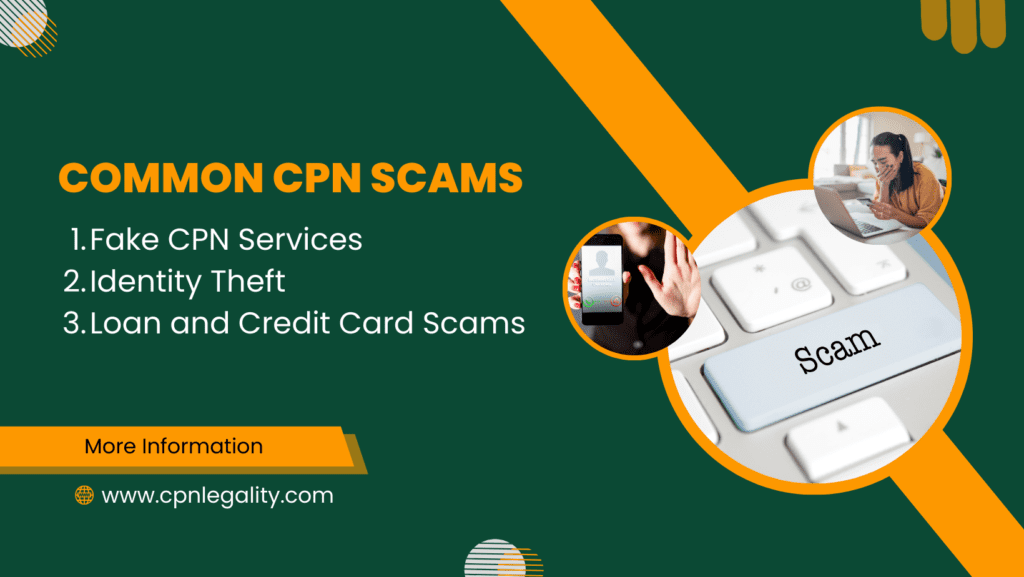
    Being aware of these prevalent CPN scams is the first step in protecting yourself from fraudsters who seek to exploit your personal information and financial security. Everyone should be aware of CPN scams. These are some common CPN scams:

    1. Fake CPN Services

    Scammers often claim to provide legitimate CPN services but end up selling fake or invalid numbers. These fake CPNs can get you into serious legal trouble.

    2. Identity Theft

    Some scammers use CPNs to steal your identity, leading to financial and personal consequences. Be wary of anyone asking for your CPN without a valid reason.

    3. Loan and Credit Card Scams

    Fraudsters may promise to secure loans or credit cards with a CPN, but these offers are usually scams. Legitimate lenders always conduct credit checks.

    Warning Signs of CPN Scams

    Recognizing these red flags and warning signs is crucial in safeguarding yourself against CPN scams, empowering you to make informed decisions and protect your financial well-being. These are some of the warning signs of CPN scams you should know:

    1. Unsolicited Offers

    If you receive unsolicited offers for CPNs via email or social media, be cautious. Legitimate services do not typically reach out this way.

    2. No Credit Check Required

    Beware of services that claim no credit checks are necessary when obtaining a CPN. Credit checks are essential for responsible lending.

    3. Request for Upfront Fees

    Scammers often ask for upfront fees for CPN services. Legitimate services do not require payment until they’ve provided the promised service.

    4. No Verification of Identity

    If a service doesn’t verify your identity or asks for minimal personal information, it could be a scam. Legitimate providers have strict verification processes.

    Protecting Yourself from CPN Scams

    Protecting Yourself from CPN Scams
    Protecting Yourself from CPN Scams

    By following these proactive measures and staying informed, you can shield yourself from falling victim to CPN scams and their potentially devastating consequences.

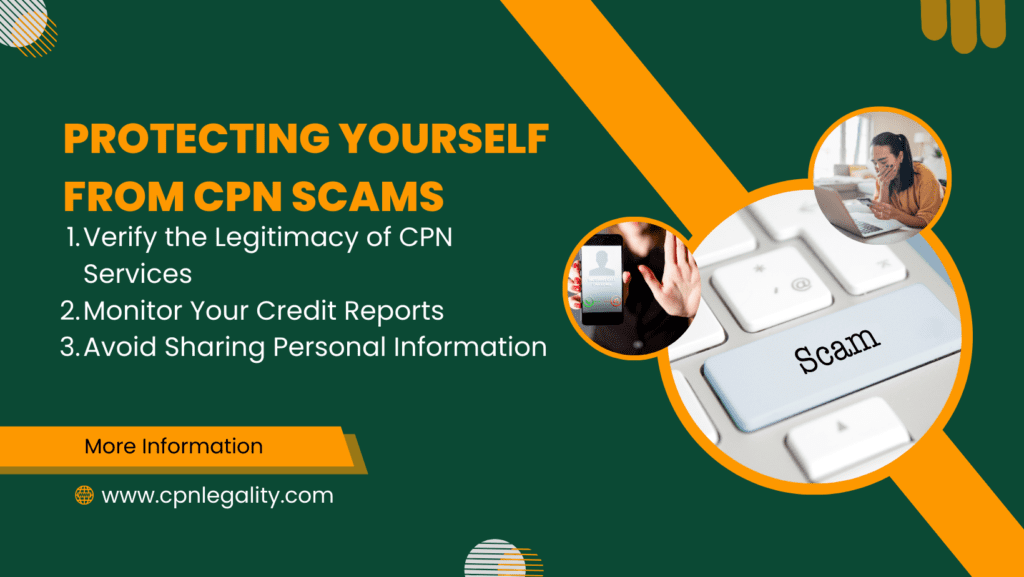
    1. Verify the Legitimacy of CPN Services

    Before using any CPN service, research its reputation, and check for reviews. Legitimate providers will have a track record of helping clients.

    2. Monitor Your Credit Reports

    Regularly monitor your credit reports to detect any unusual activity. Report discrepancies immediately to the credit bureaus.

    3. Avoid Sharing Personal Information

    Only share your CPN with trusted entities for legitimate purposes. Never give it out to unknown individuals or companies.

    Reporting CPN Scams

    Taking action by reporting CPN scams to the appropriate authorities can not only help you recover from potential fraud but also contribute to the prevention of future scams, safeguarding both your financial well-being and that of others.

    1. Contacting the Federal Trade Commission (FTC)

    If you suspect you’ve encountered a CPN scam, report it to the FTC. They investigate and take action against fraudulent activities.

    2. Filing a Complaint with Law Enforcement

    Local law enforcement agencies may also be interested in CPN scams. Filing a complaint can help prevent further fraud.

    Understanding the legal and ethical use of CPNs is essential to ensure that you leverage these identification numbers responsibly, protecting your financial reputation while staying within the boundaries of the law.

    Some legitimate credit repair services may use CPNs as part of their strategies. Ensure you use such services responsibly and ethically.

    If you legitimately obtain a CPN, use it to build your credit responsibly and within the bounds of the law.

    Conclusion

    Safeguarding yourself from CPN scams demands constant vigilance and heightened awareness. It’s imperative to exercise caution when confronted with unsolicited offers related to CPNs. Verifying the legitimacy of services offering CPN-related assistance is essential; research their reputation and track record.

    Above all, never disclose your CPN to unknown or unverified entities, as it could lead to potential identity theft or fraud. By adopting a proactive stance and staying well-informed about the risks associated with CPN scams, you take significant steps towards securing your financial well-being and personal information, ensuring a safer financial journey.

    Read related article: Understanding the Risks and Consequences of CPN Number Usage

    FAQs

    1. Can I legally use a CPN to establish credit?

    Yes, using a CPN for legitimate purposes to protect your SSN and privacy is legal. However, using it to engage in fraudulent activities is illegal and can lead to severe consequences.

    2. How can I verify if a CPN service is legitimate?

    Research the service provider, check for reviews, and ensure they have a good reputation. Legitimate services will have a history of helping clients improve their credit legally.

    3. What should I do if I suspect I’ve been a victim of a CPN scam?

    Report the incident to the Federal Trade Commission (FTC) and consider filing a complaint with your local law enforcement agency. Taking prompt action can help prevent further fraud.

    4. Are there any fees associated with obtaining a legitimate CPN?

    Legitimate CPN services may charge fees, but they typically do so after providing the promised service. Be cautious of services that demand upfront payments.

    5. Can I use a CPN to apply for loans and credit cards?

    While it is possible to apply for loans and credit cards with a CPN, legitimate lenders will still conduct credit checks. Be wary of offers that claim otherwise, as they may be scams.

  • Understanding the Risks and Consequences of CPN Number Usage

    Understanding the Risks and Consequences of CPN Number Usage

    In a world where financial security is paramount, individuals often seek alternative means to improve their creditworthiness. One such method gaining attention is the use of CPN numbers or Credit Profile Numbers.

    While CPNs may sound like a tempting solution, it’s essential to delve into the depths of this topic to understand the potential risks and consequences associated with them.

    What Are CPN Numbers?

    CPN numbers, also known as Credit Profile Numbers or Credit Privacy Numbers, are nine-digit identifiers that some individuals use as an alternative to their Social Security Number (SSN) when applying for credit. These numbers are primarily marketed as a way to protect one’s personal information and establish a new credit identity.

    What are the Financial Consequences of Using CPN

    Using a CPN number does not guarantee financial success. In fact, it can have adverse financial consequences, such as:

    • High-Interest Rates: Lenders may charge higher interest rates to individuals using CPN numbers.
    • Limited Options: Some financial institutions may limit access to credit products for CPN users.
    • Credit Challenges: Building a positive credit history can be more challenging with a CPN number.

    To minimize risks, it’s crucial to use a CPN number responsibly, only for legitimate and legal purposes. Avoid any activities that could be considered fraudulent.

    There are legitimate alternatives to CPN numbers, such as credit counseling and debt management programs, which can help individuals improve their financial situation without resorting to CPN usage.

    Credit Repair vs. CPN Numbers

    Understanding the difference between legitimate credit repair methods and CPN numbers is crucial for those looking to improve their credit standing.

    Credit bureaus play a significant role in the financial world. It’s essential to understand how CPN numbers can impact your relationship with these institutions.

    Using a CPN number when applying for a mortgage can have unique implications. It’s essential to be aware of how it can affect your eligibility and terms.

    The Risks of Utilizing CPN Numbers

    CPN numbers, also known as Credit Profile Numbers or Credit Privacy Numbers, are nine-digit identifiers that some individuals use as an alternative to their Social Security Number (SSN) when applying for credit.

    While CPNs may appear as a tempting option, there are significant risks associated with their usage.

    Perhaps the most critical risk of using CPN numbers is the potential for legal trouble. Here’s an in-depth look at the legal consequences:

    a. Criminal Charges:

    If you employ a CPN for fraudulent purposes, you can face criminal charges. These charges may include identity theft, fraud, and related offenses, depending on the nature of your CPN usage.

    b. Fines:

    In addition to potential criminal charges, you may be subjected to substantial fines imposed by the legal system. These fines can be financially burdensome and add to the overall consequences of CPN misuse.

    c. Imprisonment:

    In severe cases of CPN misuse, imprisonment is a possibility. Depending on the extent of fraudulent activities associated with your CPN use, you could face imprisonment, leading to severe personal and financial consequences.

    Understanding these legal risks emphasizes the importance of using CPNs only for their intended purposes and within the bounds of the law.

    2. Credit Damage

    It’s vital to understand that using a CPN does not guarantee a fresh start or an improved credit score. Here’s a more detailed explanation:

    a. Negative Impact:

    In practice, using a CPN can have a detrimental impact on your creditworthiness. Many creditors and financial institutions are aware of CPNs and may view their usage with suspicion. If detected, CPN usage can lead to negative marks on your credit report.

    b. Credibility Concerns:

    Creditors may question your credibility and trustworthiness when they identify CPN usage. This skepticism can result in higher interest rates, reduced credit limits, or outright denials for credit applications.

    c. Prolonged Financial Challenges:

    The damage to your credit caused by CPN usage can have long-lasting consequences, making it difficult to secure loans, credit cards, or favorable interest rates. These challenges can persist for an extended period, affecting your overall financial stability.

    3. Difficulties in Financial Transactions

    Using a CPN can introduce complications in various everyday financial transactions. Here’s a closer look:

    a. Opening Bank Accounts:

    When attempting to open a bank account, financial institutions may closely scrutinize your CPN usage. This scrutiny can result in delays, additional documentation requirements, or even denials, making it more challenging to manage your finances.

    b. Mortgage Applications:

    Securing a mortgage is a significant financial milestone for many individuals. However, using a CPN can complicate the mortgage application process, potentially leading to higher interest rates or rejection by lenders.

    c. Accessing Essential Services:

    Beyond banking and mortgages, using a CPN can pose obstacles when applying for essential services such as utilities, insurance, and rental agreements. It may require extra effort to prove your creditworthiness, leading to inconvenience and added stress.

    4. Inability to Build Genuine Credit

    Relying on a CPN may result in missing out on the opportunity to build a genuine credit history. Here’s a more detailed explanation:

    a. Importance of Credit History:

    A legitimate credit history is crucial for financial stability and future opportunities. It serves as a record of your financial responsibility and reliability, affecting your ability to secure loans, rent housing, and access various financial services.

    b. Limited Credit Opportunities:

    By using a CPN instead of your Social Security Number (SSN) for financial transactions, you limit your access to legitimate credit opportunities. This can hinder your ability to establish a strong credit profile and achieve long-term financial goals.

    The consequences of utilizing CPN numbers are substantial and wide-ranging. Understanding the legal risks, potential damage to your credit, difficulties in financial transactions, and the missed opportunity to build genuine credit underscores the importance of approaching CPN usage with caution and within the boundaries of the law.

    Prioritizing legitimate means of managing and improving your credit is essential for long-term financial stability and success.

    Conclusion

    While the idea of using CPN numbers to enhance financial privacy and creditworthiness may seem appealing, it comes with substantial risks and potential consequences.

    Engaging in CPN-related activities without a thorough understanding of the legal and financial implications can lead to severe setbacks. It’s essential to prioritize legitimate means of managing and improving your credit to secure a stable financial future.

    Related Article: Future of CPN Use: Navigating the Path Forward

    FAQs

    • Are CPN numbers legal?

    CPN numbers themselves are not illegal, but their misuse can lead to legal consequences.

    • Can CPN numbers guarantee a better credit score?

    No, CPN numbers do not guarantee improved credit scores, and their misuse can harm your credit.

    • How can I protect my identity when considering CPN numbers?

    Be cautious when sharing personal information, and only consider CPN services from reputable sources.

    • What are the legitimate uses of CPN numbers?

    CPN numbers can be used for specific purposes like business transactions, but using them to deceive creditors is illegal.

    • What is the best way to improve my credit score legally?

    The best way to improve your credit is by managing existing accounts responsibly, paying bills on time, and reducing debt. Consider seeking advice from a financial advisor for personalized guidance.